
Energy costs are a major concern for commercial property owners and facility managers. Heating and cooling large spaces requires significant energy, and an aging or inefficient roof can quietly drive those costs even higher. Investing in a new commercial roof can be a strategic decision that improves energy efficiency, lowers operating expenses, and enhances overall building performance.
If you’re in search of long-term savings for your business, replacing a worn our outdated roof can be a smart choice. Here’s everything you need to know according to Brothers Roofing and Construction, your go-to for commercial roofing in Columbus.
The Roof’s Role in Energy Efficiency
Your roof is one of the largest surfaces exposed to the elements, making it a critical component of your building’s thermal envelope. Older roofing systems often lack modern insulation standards or reflective properties, allowing heat to transfer freely in and out of the building. This forces HVAC systems to work harder to maintain consistent indoor temperatures.
A new commercial roofing system is designed to reduce heat transfer, improve insulation, and better regulate interior conditions year-round.
Improved Insulation Reduces Energy Loss
Modern commercial roofing systems incorporate advanced insulation materials that significantly reduce thermal bridging and air leakage. By minimizing heat loss during winter and heat gain during summer, improved insulation helps stabilize indoor temperatures and reduces the load on heating and cooling systems.
Better insulation not only lowers energy consumption but also improves occupant comfort throughout the building.
Reflective Roofing Materials Lower Cooling Costs
Many new commercial roofs use reflective or “cool roof” materials designed to reflect sunlight rather than absorb it. These materials reduce surface temperatures on the roof, which in turn lowers the amount of heat transferred into the building.
For facilities with large roof areas, this reduction in heat gain can lead to noticeable savings on air conditioning costs, especially during peak summer months.
Reduced HVAC Strain and Longer Equipment Life
When your roof performs efficiently, your HVAC system does not need to compensate for excessive heat loss or gain. This reduced workload can extend the lifespan of HVAC equipment, lower maintenance costs, and decrease the likelihood of unexpected system failures.
Over time, these savings add to the overall return on investment of a new roofing system.
Better Moisture Control and Air Sealing
A new commercial roof also improves air sealing and moisture management. Properly installed membranes, flashing, and insulation prevent air leaks and moisture intrusion that can compromise insulation performance and indoor air quality.
By controlling moisture and airflow, your building maintains more consistent temperatures and avoids energy loss caused by damp or deteriorated materials.
Long-Term Cost Savings and Sustainability
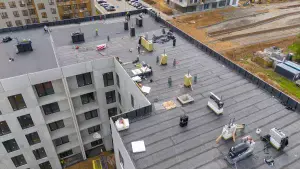 Although a new commercial roof requires upfront investment, the long-term energy savings can be substantial. Lower utility bills, reduced maintenance costs, and improved system efficiency contribute to a stronger financial outlook for building owners.
Energy-efficient roofing systems may also support sustainability goals and help meet building performance standards or certifications.
When to Consider Commercial Roof Replacement
If your commercial roof is nearing the end of its service life, experiencing frequent leaks, or contributing to high energy bills, it may be time to consider replacement. A professional assessment can determine whether a new roofing system would provide measurable efficiency improvements.
At Brothers Roofing and Construction, we help commercial property owners select and install roofing systems designed to improve energy efficiency, durability, and long-term performance.
Looking to reduce energy costs and improve building efficiency? Contact Brothers Roofing and Construction to schedule a commercial roof evaluation and explore energy-efficient roofing options.